
A 2026 Outlook: What Global Commodity Trends Mean for DRC Investments
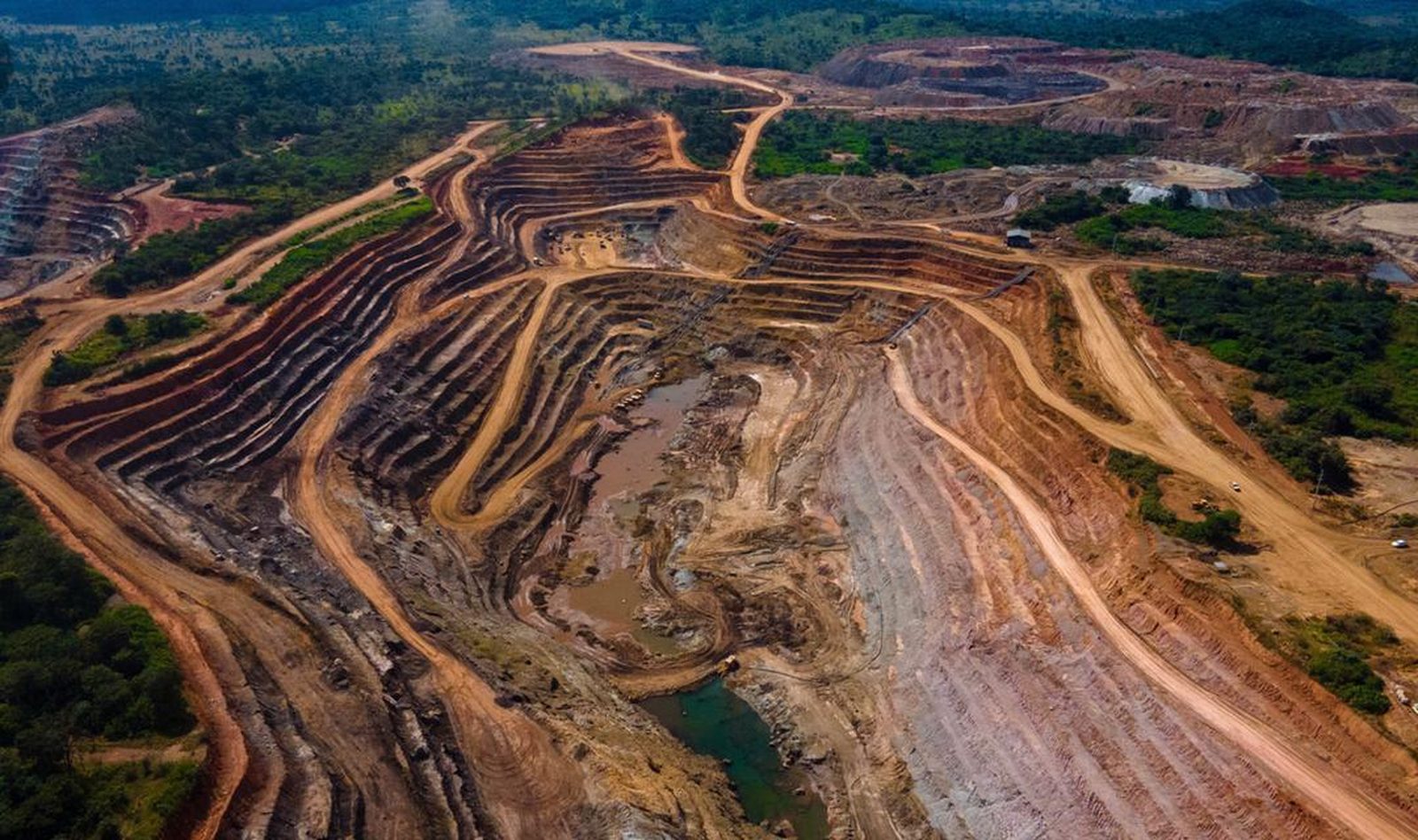
As we approach 2026, global commodity markets are at an inflection point driven by energy transition, geopolitical realignment, and technological innovation. For DRC investors, understanding these macro trends is critical as the country supplies 70% of global cobalt, 6% of copper, and emerging quantities of lithium and rare earths. This analysis provides actionable insights linking global commodity dynamics to specific DRC investment opportunities.
Electric Vehicle Revolution Drives Battery Metals Demand
Global EV sales are projected to reach 27 million units in 2026 (up from 14 million in 2023), creating unprecedented demand for battery metals. Each EV requires 8-10 kg of cobalt and 25-30 kg of copper, translating to 216,000 tons of cobalt and 675,000 tons of copper annual demand from EVs alone. DRC cobalt production capacity of 200,000 tons positions the country to capture 75-80% of EV-driven demand growth. Investment implication: Cobalt projects with AISC (All-In Sustaining Costs) below $35,000/ton will generate 40-50% profit margins at projected 2026 prices of $65,000-70,000/ton. Real example: Tenke Fungurume Mining (TFM) in Lualaba Province produces 18,000 tons cobalt annually with AISC of $28,000/ton, generating $650 million annual EBITDA at current prices.
Copper Supply Deficit Creates Long-Term Price Support
Global copper supply deficit projected at 800,000 tons annually through 2030 supports prices in the $9,800-10,500/ton range for 2026. Wind and solar installations require 4-5x more copper per MW than fossil fuel generation, driving incremental demand of 400,000 tons annually. DRC copper production expansion from 2.4 million to 3.2 million tons by 2027 positions country as critical swing supplier. Geological advantage: Katanga Province copper deposits average 3.2% copper grade vs global average of 0.6%, providing 40% lower extraction costs. Investment opportunity: Copper projects with IRR >25% at $9,000/ton copper breakeven offer attractive risk-adjusted returns. Kamoa-Kakula mine (Lualaba Province) demonstrates best-practice with 5.3% average copper grade, 34% EBITDA margins, and $1.8 billion annual revenues from 450,000 tons production.
Critical Minerals for Energy Transition
Beyond copper and cobalt, DRC emerges as important supplier of lithium, graphite, and rare earth elements essential for energy transition. Manono lithium project (Tanganyika Province) contains 400 million tons of lithium ore reserves, potentially producing 700,000 tons lithium carbonate equivalent (LCE) annually – 15% of projected 2030 global demand. Graphite deposits in Mai-Ndombe Province estimated at 80 million tons could supply 10% of global battery-grade graphite requirements. Rare earth elements discovery in Kivu Province with 60,000 tons total rare earth oxide (TREO) potential diversifies revenue streams. Price projections 2026: Lithium carbonate $20,000-25,000/ton (currently $14,000), battery-grade graphite $2,800-3,200/ton, neodymium oxide $65,000-75,000/ton. Investment strategy: Portfolio diversification across multiple battery metals reduces single-commodity price risk while maintaining exposure to energy transition mega-trend.
Gold as Portfolio Stabilizer
Gold production in DRC (predominantly eastern provinces) serves as natural hedge against commodity price volatility and currency risk. Artisanal and small-scale gold mining (ASM) produces 15-20 tons annually (unofficial estimates 30+ tons), worth $1.2-2 billion at $2,100/oz gold prices. Industrial gold mining consolidation creates investment opportunities with projects like Kibali (Orientale Province) producing 450,000 oz annually generating $900 million revenues. Gold price forecast 2026: $2,150-2,350/oz supported by central bank buying, geopolitical uncertainty, and inflation hedging demand. Strategic consideration: Gold mining provides USD-denominated revenues insulating investors from Congolese Franc volatility (historical 15-25% annual depreciation). Investment structure: Mixed copper-cobalt-gold portfolios provide commodity diversification with gold acting as volatility dampener during base metal price corrections.
Geopolitical Factors Elevating DRC Strategic Value
US-China competition for critical mineral access elevates DRC's geopolitical importance with direct investment implications. Lobito Corridor initiative ($550 million US/EU investment) connecting DRC/Zambian Copperbelt to Atlantic coast reduces Chinese infrastructure dependency and China-controlled logistics. US International Development Finance Corporation (DFC) committed $2 billion for DRC critical minerals projects 2024-2026, providing alternative financing to Chinese capital. European Union Critical Raw Materials Act designates cobalt and lithium as "strategic" triggering preferential trade terms for DRC exports meeting sustainability standards. Investment opportunity: Projects aligned with Western ESG standards and supply chain diversification objectives access lower-cost capital (WACC 8-10% vs 12-15% for China-backed projects). Tangible example: Ivanhoe Mines secured $200 million DFC loan at 6.8% interest vs 10-12% commercial rates for Kamoa-Kakula expansion demonstrating geopolitical financing advantage.
Commodity Price Volatility and Hedging Strategies
Managing commodity price risk remains critical for project financing and return optimization. Historical volatility: Cobalt prices ranged $80,000/ton (2018) to $24,000/ton (2020) demonstrating 70% downside risk. Hedging mechanisms: (1) Commodity futures contracts providing price floors typically 15-20% below spot prices, (2) Revenue-linked offtake agreements with minimum price guarantees, (3) Options strategies (collars) protecting 75% of downside while maintaining 60% upside participation. Cost structure optimization: Target all-in sustaining costs (AISC) in lowest quartile of cost curve ensuring profitability through price cycles – DRC copper projects achieve AISC $4,200-4,800/lb vs global average $3.80/lb creating vulnerability. Real-world application: Glencore Mutanda copper-cobalt operation suspended in 2019 when cobalt prices fell to $33,000/ton (AISC $35,000/ton) demonstrating importance of cost competitiveness. Recommendation: Conservative base case pricing (cobalt $50,000/ton, copper $8,500/ton) with sensitivity analysis showing project NPV at -20% and +30% price scenarios.
Infrastructure Development Reducing "DRC Premium"
Historically, DRC mining projects required 20-25% premium returns vs comparable projects in jurisdictions with better infrastructure due to higher operational costs. Infrastructure improvements materially reducing this premium: Lobito Corridor rail transport reducing copper export costs from $180/ton to $95/ton (47% reduction), Grand Inga Dam electricity expansion providing industrial power at $0.06/kWh vs current $0.12-0.15/kWh from diesel generators, Road rehabilitations cutting truck transport costs 35% on key mining corridors. Total cost impact: Infrastructure improvements reducing all-in costs 15-18% for major mining operations, improving project IRRs by 3-5 percentage points. Investment timing consideration: Projects positioned to benefit from near-term infrastructure completion (2025-2027) offer asymmetric return profile as cost reductions materialize but not yet reflected in valuations. Specific opportunity: Mining projects within 50km of Lobito Corridor rail access achieving 12-15% cost advantages vs remote operations creating geographic-based alpha generation.
Actionable Investment Strategy for 2026
Based on commodity trend analysis, recommended portfolio construction: (1) Core allocation 50-60%: Large-scale copper-cobalt operations (Kamoa-Kakula, TFM, Sicomines) providing stable cash flows and commodity exposure, (2) Growth allocation 25-30%: Mid-tier development projects (lithium, graphite, rare earths) offering 3-5x return potential, (3) Hedge allocation 10-15%: Gold producers providing portfolio stability and currency protection, (4) Speculative allocation 5-10%: Early-stage exploration in underexplored regions (Mai-Ndombe, Maniema provinces). Risk management framework: Maximum 30% single-commodity exposure, minimum 40% revenue from operations with AISC below 50th percentile global cost curve, Geographic diversification across minimum three provinces reducing security/infrastructure concentration risks. Due diligence priorities: Verified reserve statements (NI 43-101 or JORC compliant), Actual operating cost history (not just forecasts), Infrastructure access agreements (rail, port, electricity), Off-take contracts with investment-grade counterparties, Environmental and social license to operate documentation. Expected portfolio returns: 18-25% IRR over 5-7 year investment horizon assuming commodity prices track forecast ranges and operational execution meets industry standards.
The 2026 commodity outlook presents compelling opportunities for DRC-focused investors willing to navigate frontier market complexities. Energy transition fundamentals support sustained demand growth for DRC's core mineral exports with supply constraints providing price support. Critical success factors include disciplined project selection prioritizing cost competitiveness, proactive commodity risk management, and alignment with geopolitical and ESG trends unlocking preferential capital access. Investors combining commodity market expertise with on-the-ground DRC operational understanding can achieve superior risk-adjusted returns while participating in the multi-decade energy transition transformation. Ready to evaluate DRC commodity investment opportunities? Contact our team for proprietary deal flow, detailed project analytics, and investment structuring support. Download our free "DRC Mining Investment Toolkit" including Excel financial models, commodity price forecast database, and regulatory checklist.