Green Energy Projects in Congo: Where the Next Wave of Investment Lies
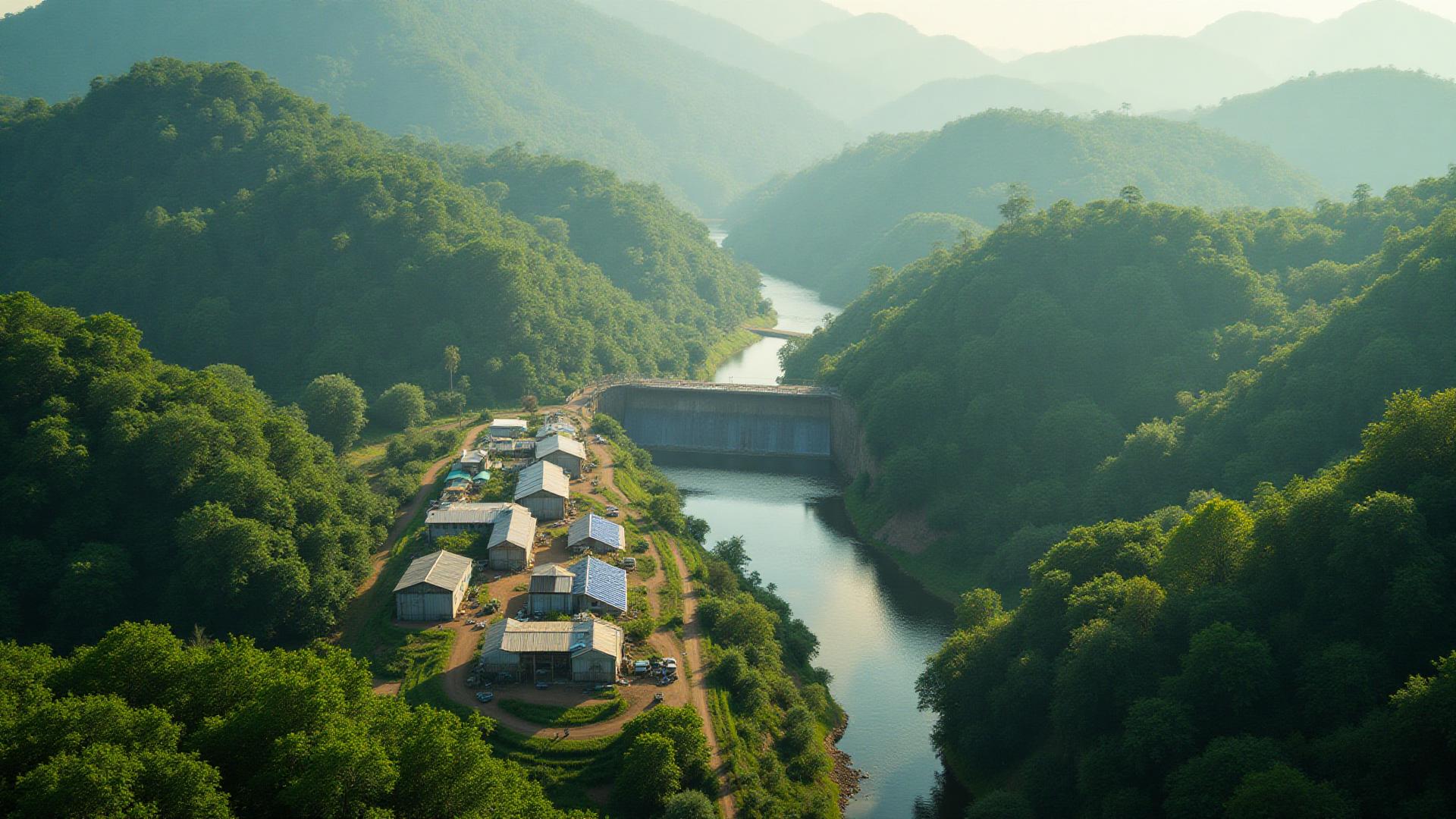
The DRC possesses Africa's largest hydropower potential (100,000 MW) yet only 2,500 MW developed, alongside exceptional solar resources (5-6 kWh/m²/day) and biomass opportunities. With 90% of the population lacking electricity access and industrial demand growing 8% annually, renewable energy represents a multi-billion dollar investment opportunity. This analysis identifies specific projects, realistic returns, and execution strategies for green energy investors.
Hydropower: The 100GW Opportunity
Grand Inga Dam potential: Total capacity 44,000 MW across 7 phases (Inga 1 & 2 operational: 1,775 MW), Phase 3 (4,800 MW) mobilizing $14 billion investment from World Bank, AfDB, and private consortium, Power Purchase Agreements signed: South Africa 2,500 MW, Nigeria 500 MW, DRC industrial 1,200 MW, Expected returns: 12-15% IRR for equity investors, 8-10% for project bonds, Timeline: Financial close 2025, first power 2029, full commissioning 2031. Small-scale hydro opportunities: 400+ sites identified with 5-50 MW potential across all provinces, Development costs: $2,000-3,500/kW depending on civil works requirements, Run-of-river designs minimize environmental impact and reduce construction timelines to 18-24 months, Revenue model: 20-25 year PPAs with SNEL (state utility) or direct industrial offtake, Typical project: 15 MW run-of-river plant: Capex $45 million, Annual generation 100 GWh, Revenue $8 million at $0.08/kWh, Operating costs $1.2 million, EBITDA $6.8 million, IRR 18-22%. Real project example: Zongo II (150 MW) commissioned 2015: Capex $620 million, PPA with SNEL at $0.065/kWh for 30 years, Achieved 95% availability factor, Project IRR 16% for equity sponsors, Successful model for mini-Inga developments. Regulatory framework: Law 014/011 allows independent power producers, Feed-in tariff structure: $0.055-0.095/kWh depending on scale and technology, Grid connection: SNEL obligated to purchase under signed PPAs, International arbitration for disputes in PPAs >50 MW.
Solar Power: Distributed Generation Revolution
Utility-scale solar opportunities: Sites identified: Kongo Central (2,000 MW potential), Katanga (1,500 MW), Kinshasa periphery (800 MW), Development costs declining: $0.90-1.10/Wp for crystalline silicon, $0.70-0.85/Wp for thin-film in large projects, Capacity factors: 18-22% in DRC (vs 25-30% in North Africa) due to cloud cover and latitude, Levelized cost of energy (LCOE): $0.055-0.075/kWh for 50+ MW projects competitive with diesel at $0.15-0.20/kWh. Commercial & industrial solar: Mining operations: 30-50 MW captive solar offsetting diesel generation, payback 3-5 years with diesel price $1.20-1.40/liter, Shopping centers: 500 kW-2 MW rooftop systems, 6-8 year payback, Hospitals and institutions: 100-500 kW systems with battery backup ensuring 24/7 power, Investment structure: Third-party ownership (solar PPA model) - investor owns system, customer purchases electricity at rates 30% below diesel alternative. Residential and mini-grid projects: 500+ remote communities >1,000 people without grid access, Mini-grids 20-100 kW serving 200-1,000 households, Capex: $5,000-8,000/kW including solar, batteries, distribution infrastructure, Revenue: $30-50/household/month for 5-10 kWh daily consumption, Subsidies available: World Bank $1,200/connection subsidy, Green Climate Fund grants 30-40% of capex, Project returns: 12-18% IRR with concessional financing and subsidies, 8-12% without subsidies. Case study - Virunga Power: 12.6 MW hydropower + 2.4 MW solar serving 15,000 customers in North Kivu, Development cost: $42 million with donor co-financing, Tariff: $0.12/kWh residential, $0.18/kWh commercial, Collection rate: 87%, Operating margin: 35%, Demonstrates viable model for conflict-affected regions with strong management.
Biomass and Waste-to-Energy
Agricultural residue potential: Palm oil processing: 450,000 tons annual waste (Equateur, Mai-Ndombe provinces) convertible to 180 GWh electricity, Coffee processing: 120,000 tons husks and pulp annually (Kivu, Ituri provinces), Sugarcane bagasse: 200,000 tons annually from existing mills, Power generation potential: 500 MW across all agricultural processing sectors, Capex: $2,500-3,500/kW for biomass cogeneration plants. Municipal solid waste: Kinshasa generates 6,000 tons daily waste (70% organic matter suitable for biogas/incineration), Only 40% collected creating investment opportunity in waste collection + energy generation, Waste-to-energy technology options: Anaerobic digestion producing biogas ($4M for 2 MW plant, 15% IRR), Incineration with energy recovery ($80M for 20 MW plant processing 500 tons/day, 12% IRR), Composting for soil amendment (organic waste), Sale of carbon credits additional revenue stream. Business model innovations: Tipping fees: $10-15/ton paid by municipalities/waste companies creating revenue alongside electricity sales, Carbon credits: 1.2-1.8 tons CO2 equivalent per ton waste diverted from landfill, monetizable at $8-12/ton under voluntary carbon markets, Community benefits: Employment in collection and operations, improved sanitation reducing disease. Forest residue and sustainable charcoal: Charcoal consumption 3 million tons annually ($1.2 billion market) causing deforestation, Sustainable forestry + efficient kilns reduce emissions 60% while maintaining supply, Industrial charcoal processing for steel industry (300,000 tons annual demand), Investment opportunity: Efficient charcoal production + reforestation $50M program, 18% IRR combining timber sales, carbon credits, and charcoal revenues. Example project: Kinshasa waste-to-energy feasibility study: 400 tons/day municipal solid waste, 8 MW net generation capacity, $35 million capex, Revenue: Electricity sales $4.8M, Tipping fees $1.8M, Carbon credits $0.6M = $7.2M annually, EBITDA margin 42%, IRR 14% with 8-year payback.
Financing Structures and Investor Returns
Project finance optimization: Capital structure: 70% debt, 30% equity typical for greenfield renewable energy, Debt sources: DFIs (IFC, AfDB, DFC) providing 15-20 year tenor at 6-8% interest, Commercial banks: 7-10 year loans at 9-12% requiring DFI participation, Export credit agencies: Equipment financing at favorable rates (prime + 4-6%), Equity returns: Target 18-25% IRR for greenfield projects, 12-18% for operational assets. Concessional financing: Green Climate Fund: Grants 30-50% for projects demonstrating climate impact, Technical assistance for project development, World Bank IDA: Highly concessional loans (1-2% interest, 25-40 year terms) for public sector projects, Partial Risk Guarantees covering regulatory/political risks, AfDB Sustainable Energy Fund: Blended finance combining concessional and commercial terms, First-loss capital improving project economics. Revenue enhancement: Carbon credits: Gold Standard/Verified Carbon Standard certification adds $0.5-1.5M annually for 10-20 MW projects, Power Purchase Agreement premiums: Green power commands 10-15% premium from ESG-focused offtakers, Capacity payments: Payments for availability even when not dispatching (typical in regulated markets). Risk mitigation instruments: Political risk insurance: MIGA, ATI covering expropriation, currency inconvertibility, war and civil disturbance, Premium 1-3% of insured value annually, Currency hedging: Natural hedges (USD-denominated PPAs for USD debt service), Forward contracts for local currency operating expenses, Liquidity facility: 6-12 month debt service reserve accounts protecting lenders. Real returns by project type: Utility hydro (>50 MW): 14-18% equity IRR, 8-10% project IRR, 10-15 year payback, Solar utility scale: 16-20% equity IRR, 10-12% project IRR, 7-10 year payback, C&I solar: 20-25% equity IRR, 12-15% project IRR, 4-7 year payback, Mini-grids: 12-16% equity IRR, 8-10% project IRR, 8-12 year payback (with subsidies).
Regulatory and Market Developments
Power sector reforms: SNEL unbundling: Generation, transmission, distribution separation creating competition, Independent regulator: ARE (Autorité de Régulation de l'Électricité) operational setting tariffs and licensing, IPP framework: Streamlined licensing for private generators (6-month approval for projects <50 MW), Open access: Third-party access to transmission network enabling direct sales to customers. Tariff structure evolution: Cost-reflective tariffs: Gradual tariff increases from $0.04/kWh (subsidized) toward $0.08-0.10/kWh (cost-reflective) by 2027, Industrial tariff: $0.085/kWh allowing competitive renewable energy entry, Feed-in tariffs: Guaranteed purchase prices for renewable energy: Solar $0.075-0.090/kWh, Small hydro $0.065-0.080/kWh, Biomass $0.080-0.095/kWh. Grid connection procedures: Technical standards: Adherence to IEEE/IEC standards for interconnection, Connection costs: Typically $50,000-200,000 per MW depending on distance to substation, Shared responsibility: Developer to substation, SNEL substation upgrades if needed, Timelines: Connection agreement 90 days, physical connection 6-12 months. National electrification strategy: Target: 30% electrification by 2030 (currently 19%) requiring 15,000 MW new capacity, Investment needs: $18 billion over 5 years ($12B generation, $4B transmission, $2B distribution), Private sector role: 60% of new generation capacity from IPPs, Public investment: Transmission backbone and distribution expansion. International support: World Bank: $1.5 billion committed to power sector 2024-2029, AfDB: $800 million for transmission infrastructure, EU: €500 million grants and technical assistance, Bilateral: US DFC, UK CDC, French AFD active in project financing. Mining sector catalyst: Mining companies require 1,200 MW incremental power 2025-2030 for expansion projects, Willingness to pay: $0.10-0.15/kWh for reliable power vs $0.18-0.25/kWh diesel backup, Anchor customers: Long-term PPAs with creditworthy mining companies enable project financing, Co-location opportunity: Renewable energy projects adjacent to mines reducing transmission costs.
Implementation Roadmap and Success Factors
Project development timeline: Phase 1 (6-12 months): Site identification and feasibility study, Resource assessment (solar irradiation, hydrological studies, biomass supply), Preliminary design and cost estimates, Environmental and social screening. Phase 2 (12-18 months): Full ESIA and community consultation, Grid connection application and technical studies, Financial model and investor presentations, Negotiate PPAs and secure anchor customers. Phase 3 (6-12 months): Financial close, Detailed engineering design, EPC contractor procurement, Permits and licenses finalization. Phase 4 (12-24 months construction): Mobilization and site preparation, Equipment procurement and installation, Grid connection infrastructure, Testing and commissioning. Total development cycle: 3-5 years from concept to commercial operation for major projects, 18-30 months for smaller C&I and mini-grid projects. Critical success factors: Strong sponsor: Experienced renewable energy developer with African track record, Local partnerships: Joint ventures with Congolese partners for relationships and approvals, Community engagement: Early and continuous consultation preventing delays, Technical excellence: Conservative design with proven equipment from reputable manufacturers (Vestas, Canadian Solar, Voith turbines), Financial structuring: Secure DFI participation early for lower cost capital and risk mitigation. Common pitfalls to avoid: Underestimating development timelines (bureaucratic delays add 30-50% to expected timeframes), Insufficient working capital: Budget $2-5M for development costs before financial close, Weak offtaker analysis: Verify customer creditworthiness (SNEL payment history variable, mining companies stronger), Poor construction management: Cost overruns average 25% without experienced construction supervision, Inadequate O&M planning: Budget 2-3% of capex annually for operations and maintenance. Partner and vendor selection: EPC contractors: Chinese contractors (Sinohydro, PowerChina) cost-competitive but quality variable, European contractors premium pricing but superior quality and project management, Hybrid approach: European engineering oversight with Chinese construction execution, Equipment: Tier 1 manufacturers essential for bankability (First Solar, JinkoSolar for solar; Andritz, Voith for hydro), O&M: International operators for first 2-3 years training local teams for handover, Legal and financial advisors: Top-tier firms (Norton Rose, White & Case, Clifford Chance) for project finance experience.
Investment Opportunities and Entry Points
Immediate opportunities (2025-2026): Kinshasa industrial solar park: 100 MW solar farm, $90M capex, 20-year PPA with mining companies consortium, Project stage: Feasibility complete, seeking equity investors ($27M equity required), Returns: 22% equity IRR, first close Q2 2025. Kisangani small hydro: 25 MW run-of-river, $80M capex, PPA with SNEL, Project stage: ESIA approved, financial modeling complete, Returns: 18% equity IRR, financial close target Q3 2025. Lubumbashi C&I solar portfolio: 15 MW across 20 commercial sites (shopping centers, hotels, hospitals), $15M capex, Direct customer contracts at $0.12/kWh (40% below diesel), Project stage: 8 sites signed LOIs, seeking development capital, Returns: 24% equity IRR, 5-year payback. Near-term pipeline (2026-2027): Katanga hydro (80 MW): $240M capex, Copperbelt mining offtake, 16% IRR, Goma waste-to-energy: 5 MW, $22M capex, municipal waste + electricity sales, 15% IRR, Kinshasa mini-grid network: 50 sites, 10 MW total, $45M capex with subsidies, 14% IRR. Investment vehicles: Direct project investment: Equity stakes 20-40% in specific projects, $10-50M typical ticket size, Active governance rights, Project-level returns. Fund investment: DRC-focused renewable energy fund: $200M target, 10-15 project portfolio, 15-18% net IRR target, Diversification across technologies and geographies. Equipment leasing: Finance solar panels/inverters/batteries with lease-to-own structure, Lower risk profile, 12-15% returns, Requires local servicing capability. Take-private of SNEL assets: Potential privatization of SNEL generation assets creating acquisition opportunity, 1,775 MW existing capacity underutilized (50% load factor), Operational improvement could increase output 40-50%, Requires government negotiations and multi-year turnaround plan. How to get started: Download our "DRC Renewable Energy Investment Guide" with project database, financial models, regulatory overview. Schedule site visit to operational projects and pipeline opportunities. Join our quarterly renewable energy investor forum connecting developers, investors, and offtakers. Access our network of local partners including legal, technical, and community relations specialists. Partner with our team providing full-cycle support from project identification through exit.
Green energy in DRC offers exceptional investment opportunities combining strong financial returns (12-25% IRR), massive market need (90% lack electricity access), and abundant resources (100GW hydro potential, excellent solar). Success requires realistic timeline expectations (3-5 years concept to operation), strong local partnerships, proper risk mitigation through DFI participation and political risk insurance, and experienced project sponsors with African renewable energy track records. The sector stands at an inflection point with improving regulatory frameworks, growing industrial demand, and increasing international support. Early movers establishing presence now will capture the most attractive opportunities as the market scales from <100 MW annual additions currently to 1,000+ MW annually by 2030. Ready to invest in DRC renewable energy? Contact our team for exclusive access to our project pipeline, developer partnerships, and comprehensive investment support.